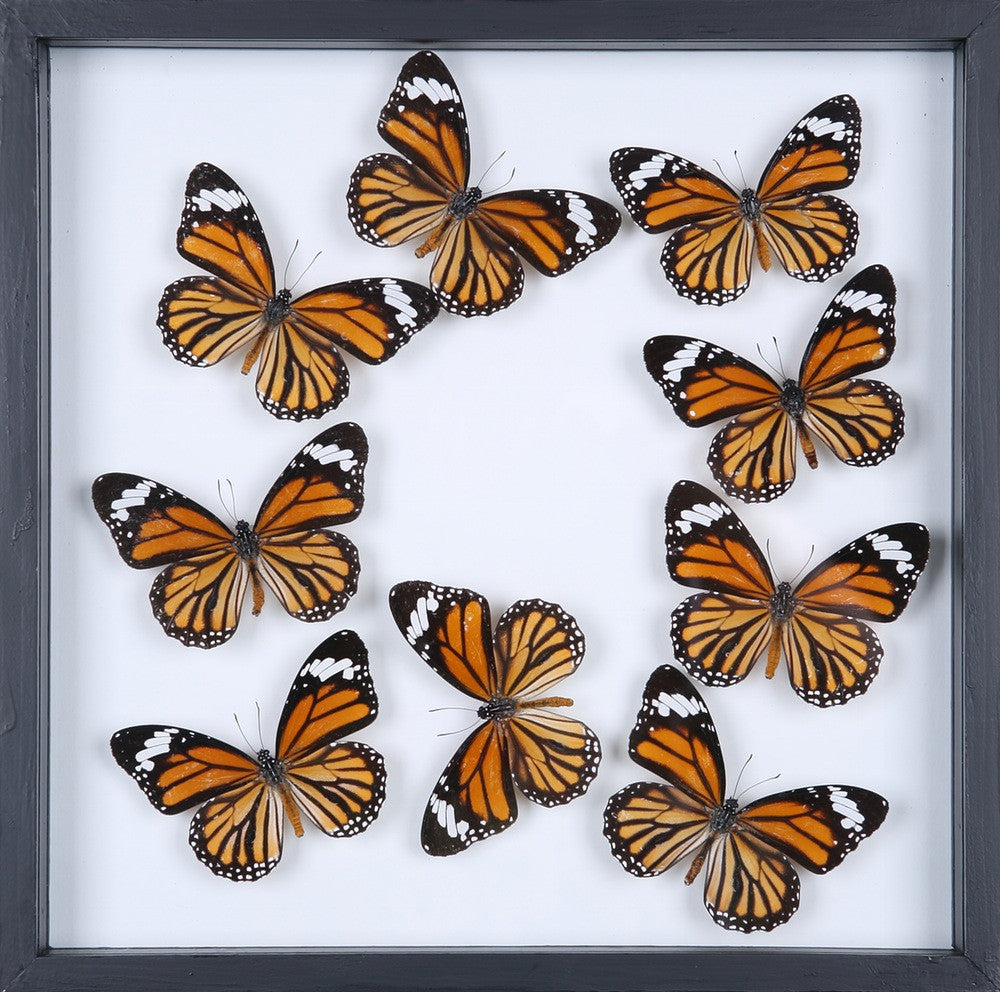
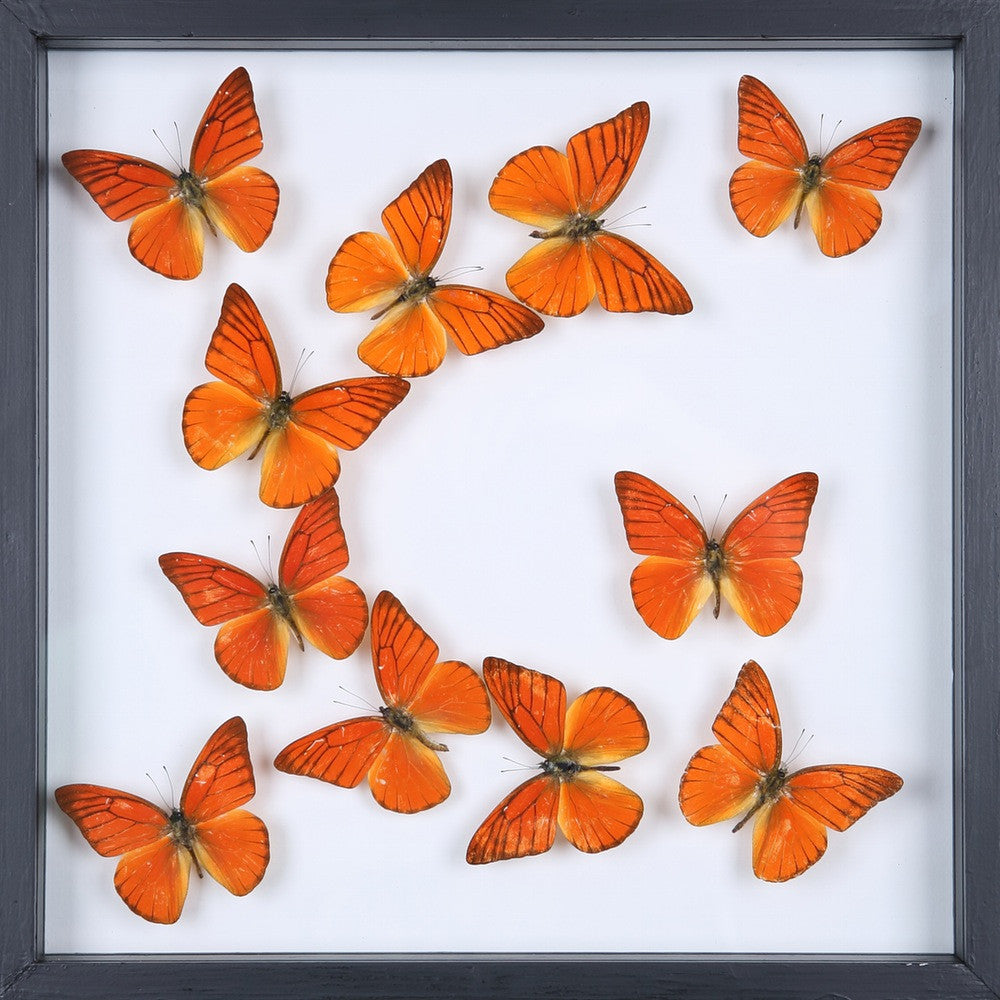
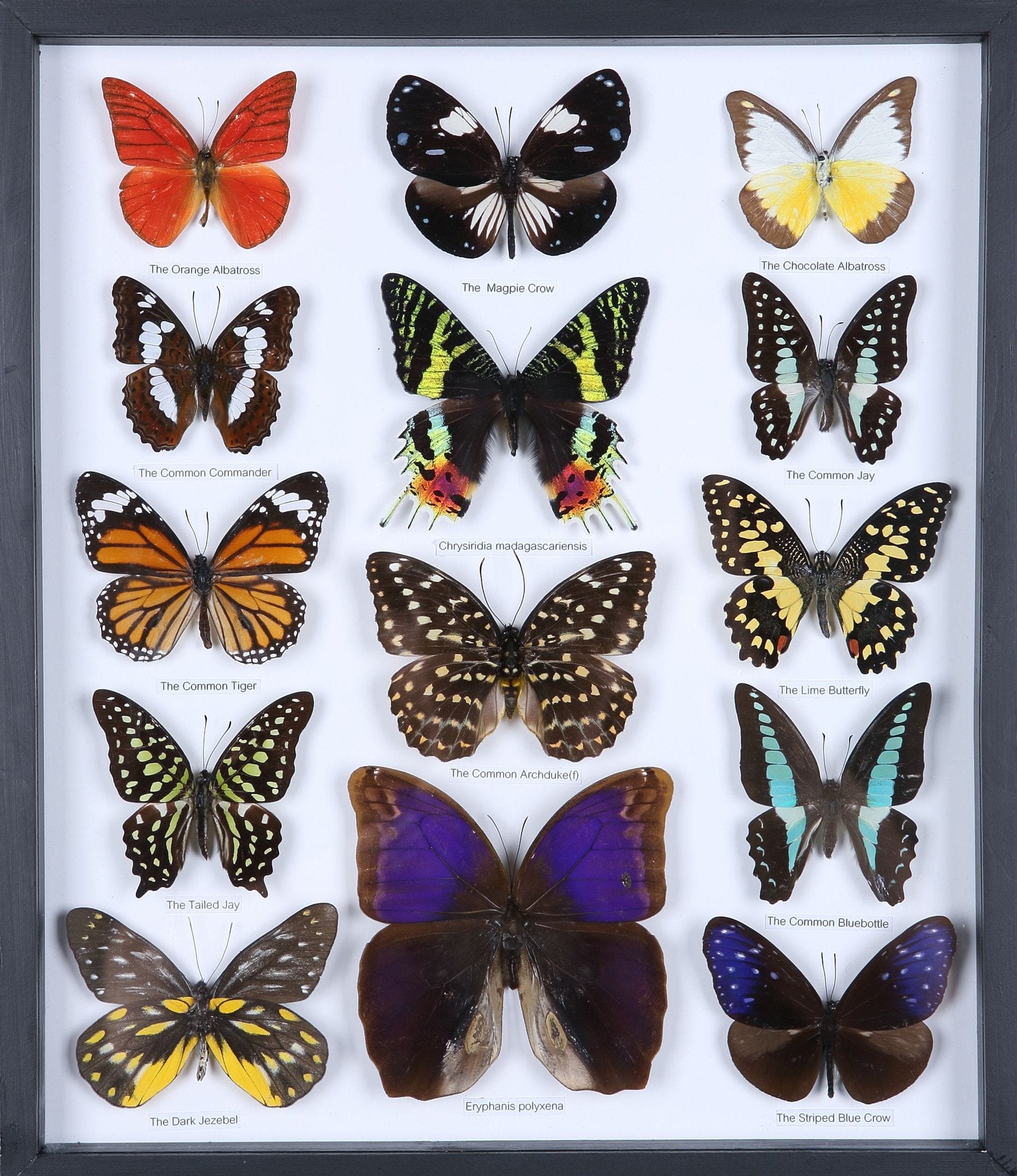
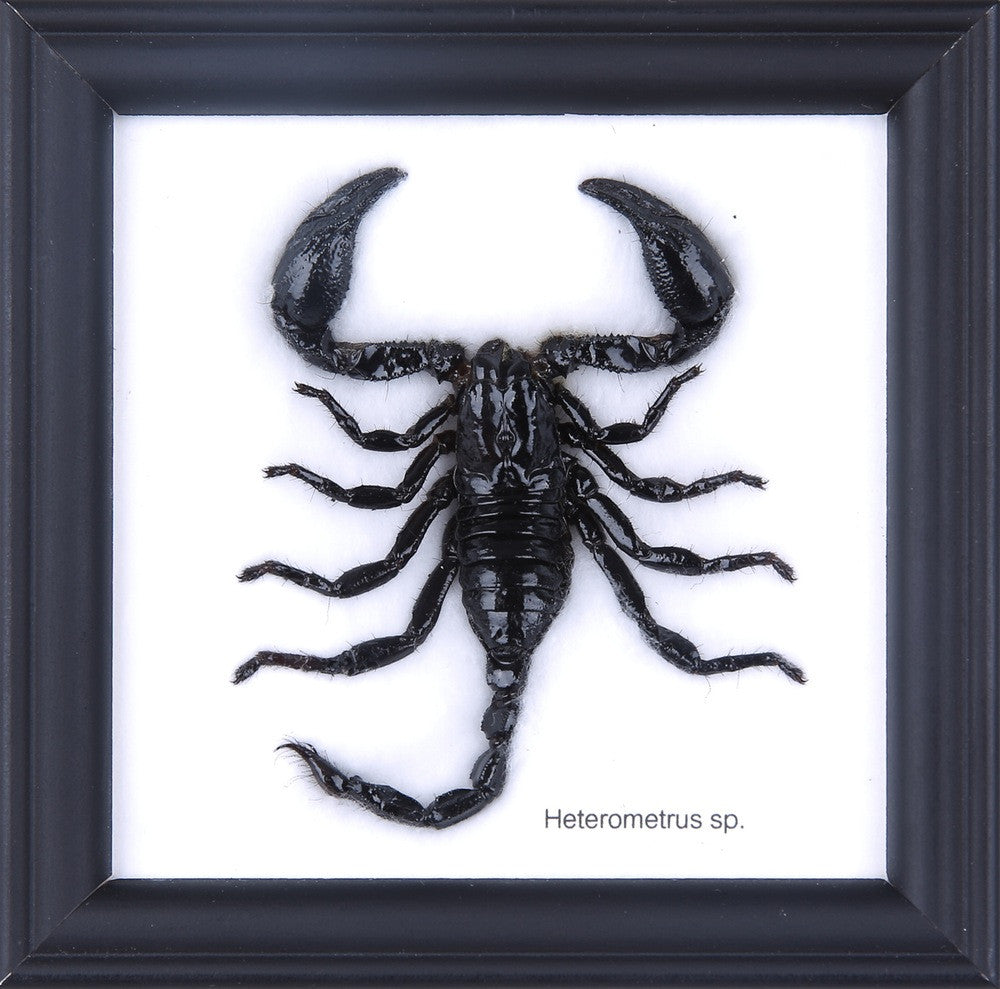
Get your package anywhere!
Welcome to BugsDirect Ltd. Leading Suppliers of Worldwide Entomology Specimens (Retail/Wholesale)
Australia is home to approximately 400 butterfly species, representing some of the world's most spectacular and diverse Lepidoptera. From the iconic Ulysses butterfly of the tropical rainforests to the delicate blues of the temperate south, Australian butterflies showcase extraordinary adaptations to the continent's varied climates and ecosystems.
This comprehensive guide explores the natural history, identification features, and ecology of Australia's most notable butterfly families and species.
Australian butterflies belong to five main families: Papilionidae (swallowtails and birdwings), Pieridae (whites and yellows), Lycaenidae (blues, coppers and azures), Nymphalidae (brushfoots, including monarchs, admirals and browns), and Hesperiidae (skippers). Many species are endemic to Australia, found nowhere else on Earth.
The continent's butterfly fauna reflects its biogeographic position, with strong connections to Indo-Pacific tropical species in the north and unique temperate endemics in the south. Australian butterflies occupy habitats ranging from tropical rainforests and mangroves to alpine meadows and arid desert regions.
Australia's most spectacular butterflies, including the world's largest butterfly species. This family includes the magnificent birdwings of tropical Queensland and several swallowtail species found across the continent.
Notable Species:
Cairns Birdwing (Ornithoptera euphorion)
Australia's largest endemic butterfly with a wingspan up to 165mm. Males are brilliant green and black; females are larger with white and black wings. Found only in tropical rainforests of northeast Queensland. Larvae feed exclusively on native Aristolochia vines.
Richmond Birdwing (Ornithoptera richmondia)
Endangered species of subtropical rainforests in southeast Queensland and northeast New South Wales. Males are black with brilliant green patches; females are larger and darker. Conservation efforts focus on planting native Pararistolochia vines and removing toxic introduced vines.
Ulysses Butterfly (Papilio ulysses)
The iconic electric-blue swallowtail of tropical Queensland rainforests. Males have iridescent blue upperwings visible from great distances; females are similar but with blue crescents on hindwings. Wingspan 100-130mm. Larvae feed on various rainforest trees including Euodia species. A symbol of tropical north Queensland tourism.
Orchard Swallowtail (Papilio aegeus)
Common and widespread along Australia's east coast from Cape York to Victoria. Males are black with white bands; females are larger with blue and red hindwing markings. Wingspan 80-100mm. Larvae feed on citrus trees, making them familiar garden visitors.
Dainty Swallowtail (Papilio anactus)
Smaller swallowtail (wingspan 60-80mm) found across most of Australia. Cream-white with black markings and distinctive tail streamers. Larvae feed on native and introduced citrus family plants.
Medium-sized butterflies, often white or yellow, including some of Australia's most beautiful and distinctive species.
Notable Species:
Caper White (Belenois java)
Famous for mass migrations across eastern Australia. Wingspan 50-65mm, white with black wingtips. Larvae feed on native capers (Capparis spp.). Migrations can involve millions of individuals moving south in spring.
Yellow Albatross (Appias paulina)
Large white butterfly (wingspan 70-90mm) of tropical and subtropical regions. Males are white; females are yellow. Strong fliers often seen along forest edges and coastal areas.
Red-based Jezebel (Delias argenthona)
Spectacular species with white upperwings and brilliant red, yellow and black underwings. Wingspan 60-70mm. Found in rainforests and wet eucalypt forests of eastern Australia. Larvae feed on mistletoes.
Common Jezebel (Delias nigrina)
Similar to Red-based Jezebel but with orange-red underwings. Widespread in eastern coastal forests. Slow, conspicuous flight advertises toxicity from mistletoe-feeding larvae.
Lemon Migrant (Catopsilia pomona)
Large yellow butterfly (wingspan 55-70mm) found across northern and eastern Australia. Migratory species, sometimes appearing in large numbers. Larvae feed on Cassia species.
Small, delicate butterflies, often with brilliant metallic colours. Australia has over 150 species in this family, many endemic.
Notable Species:
Common Grass-Blue (Zizina labradus)
Australia's most widespread butterfly, found in virtually every habitat. Tiny (wingspan 20-25mm) with violet-blue males and brown females. Larvae feed on various legumes.
Imperial Blue (Jalmenus evagoras)
Larger lycaenid (wingspan 30-35mm) with brilliant blue upperwings. Notable for ant-association: larvae are tended by Iridomyrmex ants that protect them from parasitoids in exchange for sugary secretions. Feed on wattles (Acacia spp.).
Fiery Jewel (Hypochrysops ignita)
Spectacular small butterfly with brilliant orange-red and blue colouration. Found in tropical and subtropical regions. Larvae associate with ants and feed on mistletoes.
Purple Copper (Paralucia pyrodiscus)
Endangered species of alpine and subalpine regions in southeast Australia. Males are brilliant purple; females are brown. Larvae have obligate association with Notoncus ants and feed on Bursaria shrubs.
Large, diverse family including some of Australia's most familiar butterflies. Many are strong fliers with bold patterns.
Notable Species:
Monarch (Danaus plexippus)
Introduced species, now established along Australia's east coast. Orange and black with wingspan 90-100mm. Famous for long-distance migrations. Larvae feed on introduced milkweeds and are toxic to predators.
Wanderer (Danaus petilia)
Native Australian monarch relative, similar in appearance but slightly smaller. Found in northern and eastern coastal regions. Larvae feed on native milkweeds and vines.
Blue Tiger (Tirumala hamata)
Large (wingspan 75-85mm) blue-black butterfly with white spots and streaks. Found in tropical and subtropical regions. Slow, gliding flight. Larvae feed on native vines and are toxic.
Australian Painted Lady (Vanessa kershawi)
Orange, black and white butterfly (wingspan 50-60mm) found across Australia. Similar to Northern Hemisphere Painted Lady but endemic to Australia. Migratory species, sometimes appearing in huge numbers. Larvae feed on various plants including everlastings.
Australian Admiral (Vanessa itea)
Orange-brown butterfly with white spots (wingspan 45-55mm). Found across southern Australia. Larvae feed on nettles. Adults often bask on paths and rocks.
Meadow Argus (Junonia villida)
Brown butterfly with distinctive eyespots (wingspan 45-55mm). Common and widespread across Australia. Larvae feed on plantains and other low herbs. Adults are territorial and often return to the same perch.
Common Brown (Heteronympha merope)
Brown butterfly with orange patches and eyespots (wingspan 40-50mm). Abundant in southern Australia, especially in grasslands and gardens. Larvae feed on native grasses.
Cruiser (Vindula arsinoe)
Large orange butterfly (wingspan 70-90mm) of tropical rainforests. Males are bright orange; females are larger and paler. Strong, gliding flight through forest canopy. Larvae feed on passion vines.
Small to medium butterflies with rapid, darting flight. Over 100 species in Australia, many difficult to identify.
Notable Species:
Regent Skipper (Euschemon rafflesia)
Australia's most spectacular skipper and only member of subfamily Euschemoninae. Wingspan 50-60mm with brilliant orange, yellow and black markings. Found in tropical Queensland rainforests. Larvae feed on Arytera trees.
Chequered Skipper (Anisynta cynone)
Small brown and white skipper (wingspan 25-30mm) common in southern Australia. Larvae feed on grasses.
Northern Australia, particularly the Wet Tropics of Queensland, hosts the continent's greatest butterfly diversity. This region includes rainforest specialists, Indo-Pacific migrants, and spectacular endemics like the Ulysses butterfly and Cairns Birdwing.
Southern Australia has fewer species but high endemism. Cool-climate specialists include alpine coppers, browns, and skippers found nowhere else. The region shows seasonal patterns with spring and summer flight periods.
Central Australia has relatively few resident butterfly species, but after good rains, migratory species like Caper Whites and Australian Painted Ladies can appear in enormous numbers, exploiting temporary flowering.
Several Australian butterflies are migratory, including Caper White, Australian Painted Lady, Lemon Migrant, and Monarch. Migrations are often triggered by population build-up and resource depletion, with millions of individuals moving hundreds of kilometers.
Many Australian lycaenids have evolved remarkable relationships with ants. Larvae produce sugary secretions from specialized glands, attracting ants that protect them from parasitoids and predators. Some species have obligate associations with specific ant species.
Several Australian butterflies exhibit Batesian or Müllerian mimicry. Toxic species like jezebels and tigers advertise their unpalatability with bright colours, while some non-toxic species mimic toxic ones for protection.
Many male butterflies, particularly nymphalids and skippers, are highly territorial. Males establish perches on hilltops, along ridges, or in forest clearings, defending territories and investigating passing insects.
Several Australian butterflies are listed as threatened, including:
Conservation initiatives include habitat restoration, captive breeding programs (Richmond Birdwing), community planting of larval foodplants, and citizen science monitoring through programs like the Australian Butterfly Conservation Project.
Butterflies feature in Aboriginal Dreamtime stories and art across Australia. Different language groups have distinct names and cultural associations for butterflies, often linking them to seasonal changes, weather patterns, and food availability. The transformation from caterpillar to butterfly appears in stories about change and renewal.
Australian butterfly specimens have been collected and studied since European settlement, with major collections held at the Australian Museum, Museums Victoria, Queensland Museum, and CSIRO. Historical collections provide invaluable data on distribution changes, phenology shifts, and the impacts of land use change.
Ethically sourced specimens from sustainable captive breeding programs allow collectors, educators, and researchers to study Australian Lepidoptera without impacting wild populations. Many spectacular species, including birdwings and swallowtails, are bred in captivity for educational and conservation purposes.
Australian butterfly specimens are ideal for teaching:
Attract native butterflies by planting:
Nectar Plants: Native grasses, grevilleas, bottlebrushes, tea-trees, native hibiscus, everlastings
Larval Foodplants:
Garden Design: Create sunny, sheltered areas for basking, provide water sources, avoid pesticides, plant in clusters for visibility, and include a variety of flowering plants for year-round nectar.
For identifying Australian butterflies, we recommend:
Key references for Australian butterfly biology and conservation:
BugsDirect specializes in museum-quality entomological specimens from around the world, including ethically sourced Australian butterfly specimens. Explore our butterfly collection or contact us for information about Australian Lepidoptera specimens for educational and collection purposes.