Discover the Wonders of Lepidoptera
From their remarkable metamorphosis to their intricate wing patterns, butterflies are among nature's most captivating creatures. Whether you're a collector, enthusiast, or simply curious about these beautiful insects, these facts will deepen your appreciation for the specimens in our collection.
Anatomy & Biology
-
Butterflies taste with their feet – Chemoreceptors on their tarsi help them identify host plants for laying eggs.
-
They can see ultraviolet light – Their vision extends beyond human capability, revealing patterns invisible to us.
-
Wing scales create colour – Microscopic scales reflect light to produce the vibrant hues we admire in preserved specimens.
-
Cold-blooded creatures – Butterflies cannot regulate their body temperature and rely on external warmth.
-
Four-stage lifecycle – Egg, larva (caterpillar), pupa (chrysalis), and adult butterfly represent complete metamorphosis.
Behaviour & Ecology
-
Migration champions – Monarch butterflies travel up to 3,000 miles during their annual migration.
-
Puddling behaviour – Males gather at mud puddles to extract minerals, particularly sodium.
-
Short adult lifespan – Most species live only 2-4 weeks as adults, though some can survive months.
-
Nectar specialists – Their proboscis acts as a straw to sip nectar from flowers.
-
Thermoregulation through basking – Butterflies spread their wings to absorb solar radiation before flight.
Diversity & Classification
-
Over 17,500 species – Lepidoptera represents one of the largest insect orders.
-
Six butterfly families – Including Papilionidae (swallowtails), Nymphalidae (brush-footed), and Pieridae (whites and sulphurs).
-
Found on every continent except Antarctica – Their adaptability is remarkable.
-
Tropical diversity hotspots – Rainforests harbour the greatest species richness.
-
Endemic species – Many butterflies exist only in specific geographic regions.
Wings & Patterns
-
Symmetrical wing patterns – Both sides typically mirror each other perfectly.
-
Eyespots deter predators – False eyes on wings startle or misdirect attackers.
-
Sexual dimorphism – Males and females often display different colours and patterns.
-
Iridescence from structure – Some species like Morpho butterflies achieve blue through microscopic architecture, not pigment.
-
Transparent wings exist – Glasswing butterflies (Greta oto) have see-through wings with minimal scales.
Conservation & Collection
-
Habitat loss threatens populations – Deforestation and development impact butterfly diversity.
-
CITES protection – Certain species require permits for international trade.
-
Indicator species – Butterfly populations reflect ecosystem health.
-
Sustainable farming practices – Ethical collectors work with butterfly farms in source countries.
-
Museum specimens aid research – Preserved collections document biodiversity and historical distributions.
Fascinating Extremes
-
Largest butterfly – Queen Alexandra's Birdwing (Ornithoptera alexandrae) spans up to 28cm.
-
Smallest butterfly – Western Pygmy Blue measures just 12mm across.
-
Fastest flyer – Skippers can reach speeds of 37 mph.
-
Highest altitude – Some species have been found at elevations exceeding 6,000 metres.
-
Ancient lineage – Butterfly fossils date back 56 million years.
The Art of Preservation
-
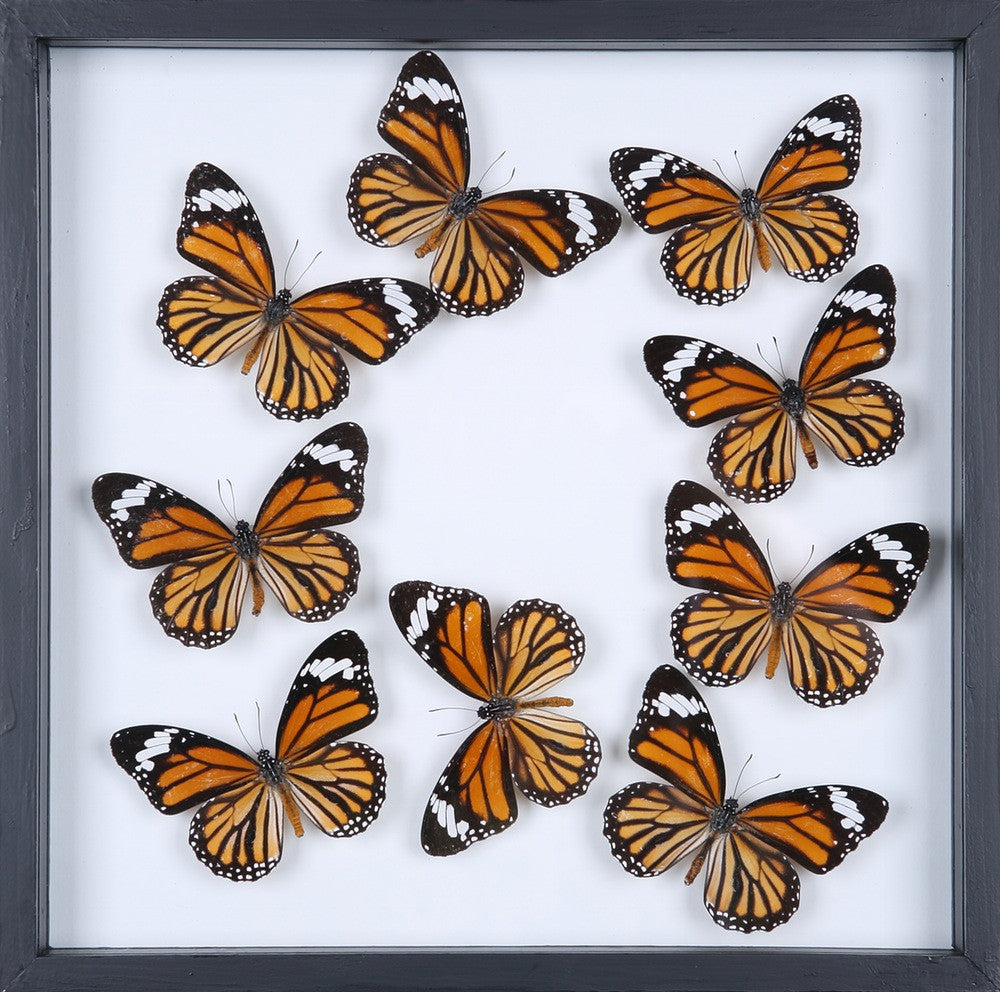
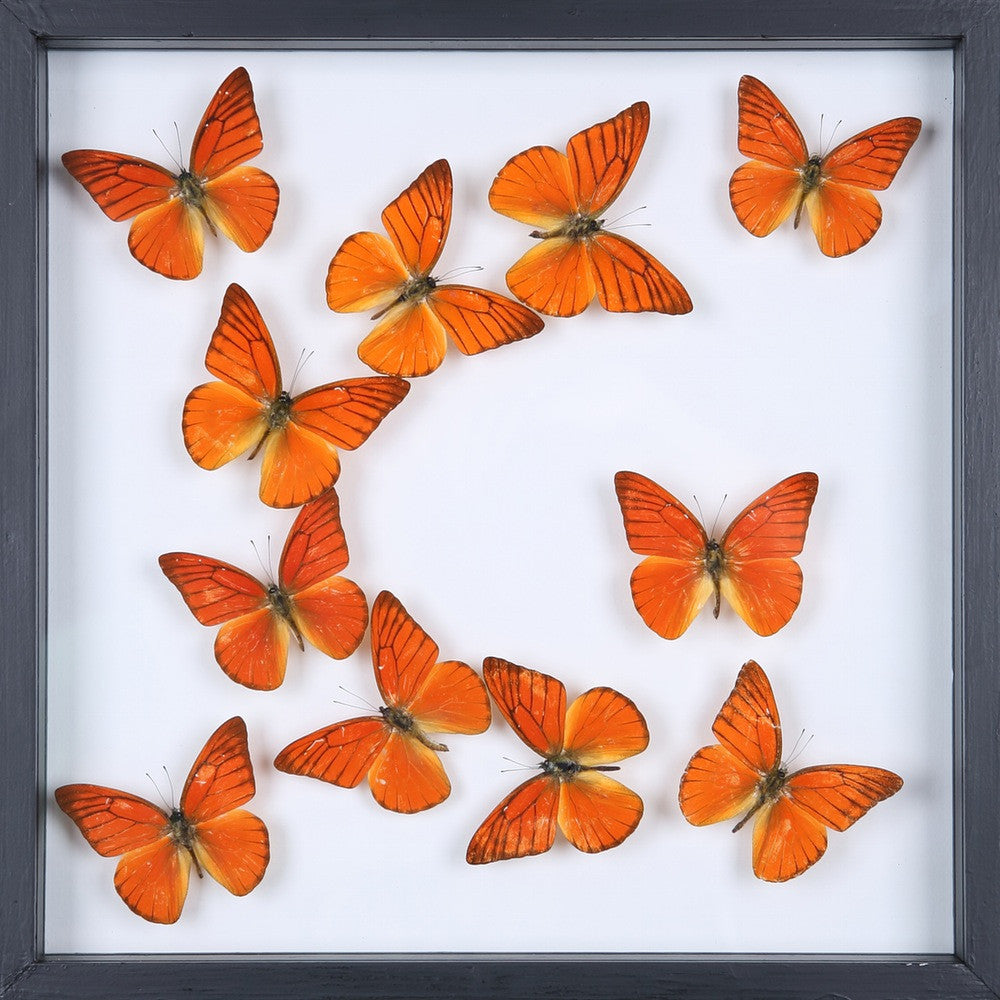
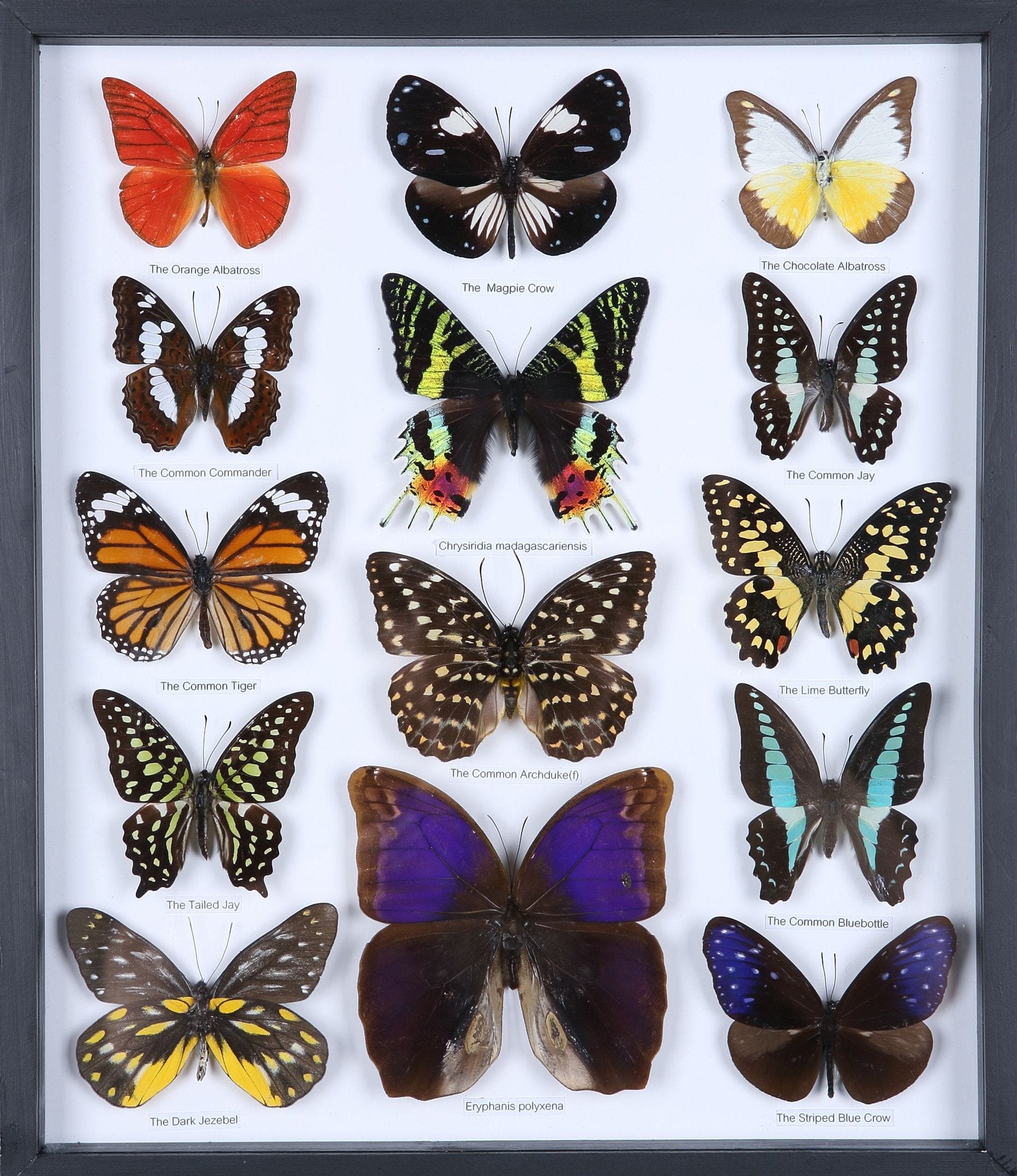
Proper spreading maintains beauty – Museum-quality mounting techniques ensure specimens retain their natural form for generations, allowing collectors to appreciate these remarkable creatures long after their brief lives have ended.
Explore our collection of ethically sourced, museum-grade butterfly specimens and bring these natural wonders into your home.