Get your package anywhere!
Welcome to BugsDirect Ltd. Leading Suppliers of Worldwide Entomology Specimens (Retail/Wholesale)
Everything you need to know about our museum-quality mounting techniques, specimen care, and ethical sourcing practices.
What does "museum-quality" preservation mean?
Museum-quality preservation refers to the use of archival materials and traditional entomological techniques that meet the standards of natural history institutions worldwide. This includes proper spreading, precision pinning, acid-free mounting materials, and climate-controlled drying processes that ensure specimens retain their natural form and colour for decades or even centuries.
How long will my preserved butterfly specimen last?
When properly cared for, museum-quality specimens can last indefinitely—many museum collections contain specimens over 100 years old that remain vibrant and intact. The key factors are UV protection, stable temperature and humidity, and protection from pests. With appropriate display conditions, your specimen will remain a beautiful heirloom for generations.
What is the difference between properly spread and improperly mounted specimens?

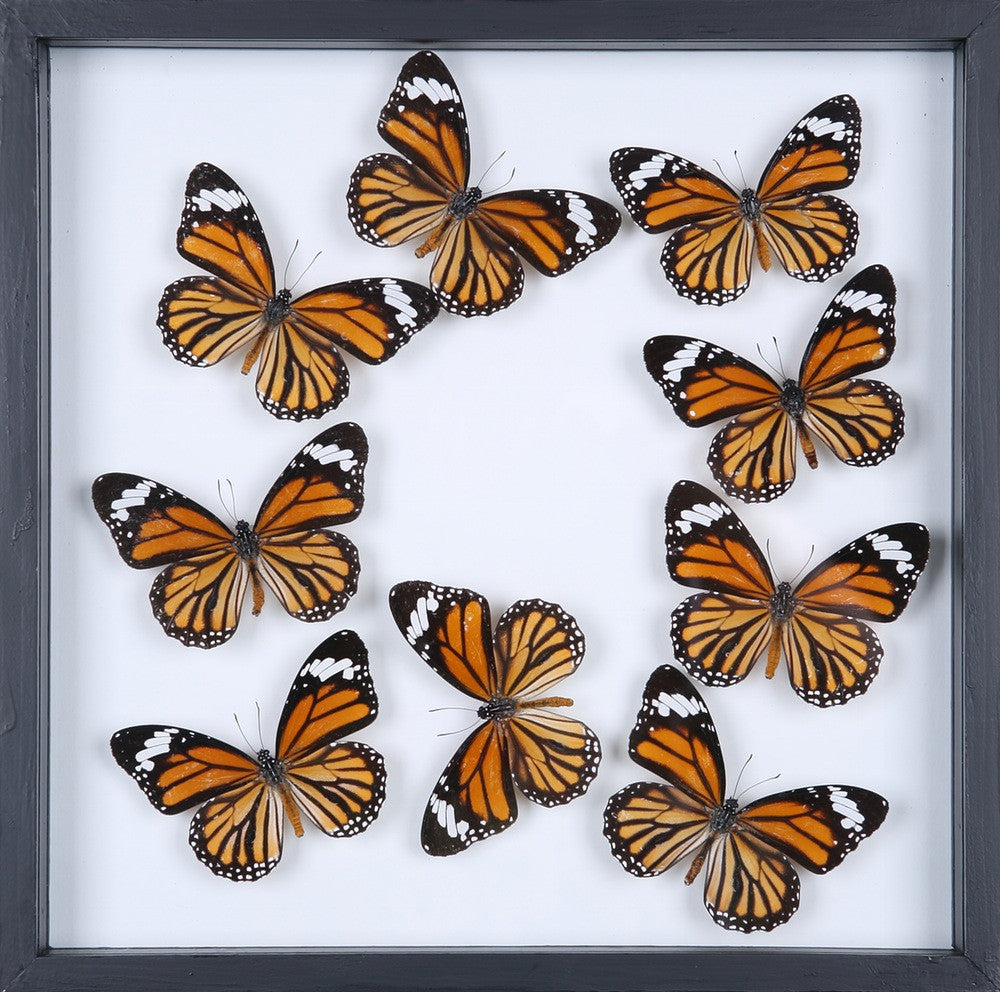
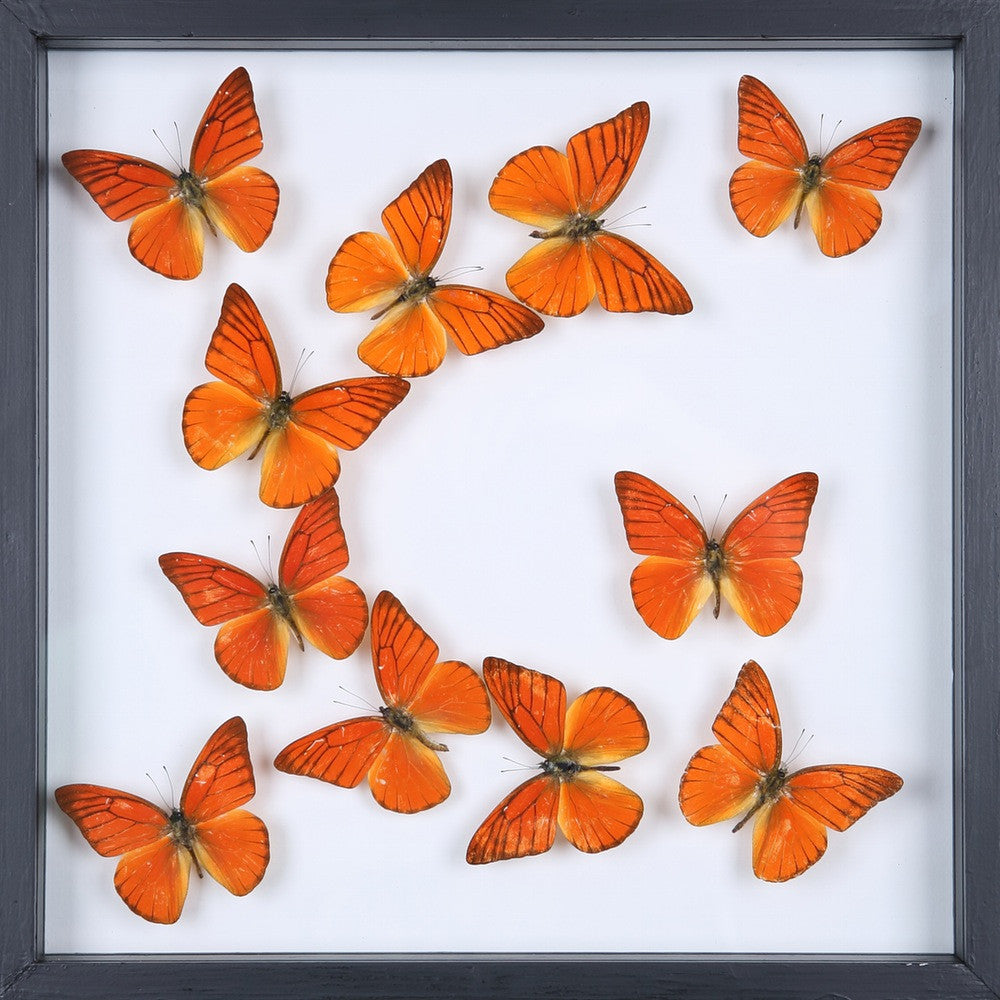
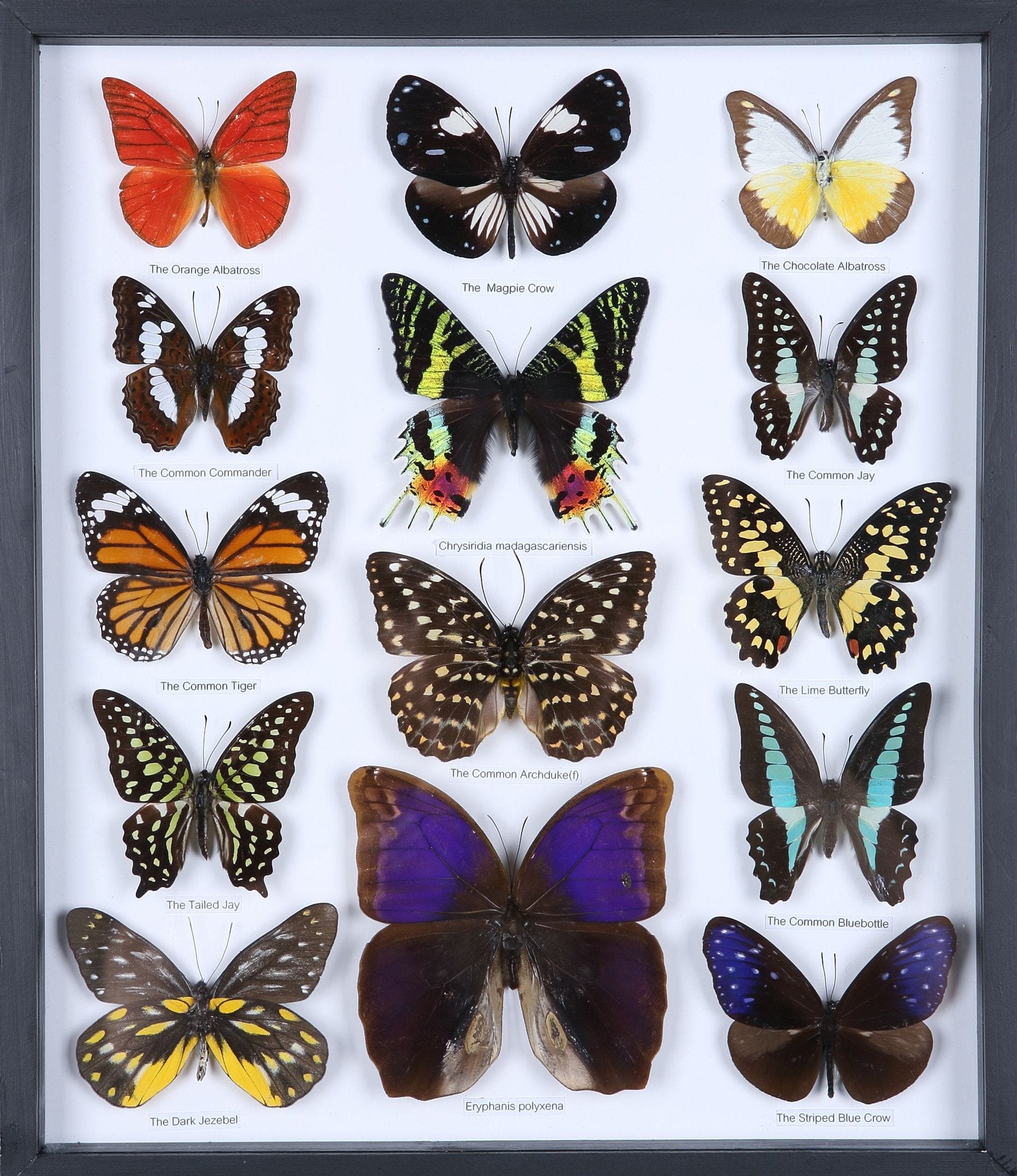
Proper spreading positions the wings symmetrically with forewings and hindwings aligned to showcase the full pattern and natural anatomy. Improperly mounted specimens may have crooked wings, damaged scales, or unnatural positioning that diminishes both aesthetic appeal and scientific value. Our specimens are carefully spread on traditional boards to achieve perfect symmetry.
Do the colours fade over time?
Butterfly wing colours are remarkably stable when protected from UV light. Pigment-based colours (yellows, reds, blacks) and structural colours (blues, iridescence) will remain vibrant for decades in UV-resistant display cases. Direct sunlight is the primary cause of fading, which is why we recommend displaying specimens away from windows or using UV-filtering glass.
Are your specimens treated with any chemicals?
Specimens undergo a gentle relaxation process using controlled humidity—no harsh chemicals are used. Once mounted and dried, they may be stored with natural pest deterrents such as cedar or lavender, but the specimens themselves are not chemically treated, preserving their natural integrity.
Where do your butterflies come from?
Our specimens are ethically sourced from sustainable butterfly farms in tropical regions and from licensed collectors who operate within CITES regulations. Butterfly farming provides income for local communities whilst protecting wild populations, as farmed specimens reduce pressure on natural habitats.
Are any of your specimens wild-caught?
Some specimens are wild-caught by licensed collectors operating under strict quotas and conservation guidelines. We only work with suppliers who adhere to CITES regulations and sustainable collection practices. Many species are abundant and not threatened, making responsible collection a viable conservation tool when properly managed.
What is CITES and why does it matter?
CITES (Convention on International Trade in Endangered Species) is an international agreement that regulates trade in wildlife to ensure it doesn't threaten species survival. Certain butterfly species require permits for international trade. We maintain full compliance with CITES regulations and can provide documentation for protected species upon request.
How should I display my framed butterfly specimen?

Display your specimen in a location away from direct sunlight, moisture, and temperature extremes. Ideal conditions include stable room temperature (18-22°C), low humidity (40-50%), and indirect lighting. UV-resistant glass or acrylic provides additional protection against fading. Avoid hanging near radiators, air vents, or in bathrooms and kitchens.
How do I clean the glass on my display case?
Use a soft, lint-free cloth with a small amount of glass cleaner applied to the cloth (never spray directly onto the frame). Wipe gently to avoid vibration that could dislodge scales. For antique or delicate frames, use only a dry microfibre cloth.
What should I do if I notice small insects or damage?
If you observe tiny beetles, webbing, or frass (insect droppings), your specimen may have a pest infestation. Isolate the frame immediately and contact us for guidance. Common museum pests include carpet beetles and booklice. Freezing the specimen at -20°C for 72 hours can eliminate pests, but this should be done carefully to avoid condensation damage.
Can I handle unmounted specimens?
Unmounted specimens are extremely fragile and should only be handled by the wings' edges using soft forceps or while wearing cotton gloves. Never touch the wing surfaces, as oils from skin can damage scales. Store unmounted specimens in airtight containers with acid-free paper and silica gel packets.
How are specimens packaged for shipping?
Framed specimens are wrapped in protective foam, secured in custom-sized boxes with additional cushioning, and marked as fragile. Unmounted specimens are pinned in rigid storage boxes with foam inserts to prevent movement. We use tracked, insured shipping methods to ensure safe delivery.
Do you ship internationally?
Yes, we ship worldwide. International orders may require CITES permits for certain protected species, which we arrange on your behalf. Customs documentation is included with all shipments. Please note that import regulations vary by country, and additional duties or taxes may apply.
What if my specimen arrives damaged?
We take every precaution to ensure safe delivery, but if damage occurs during transit, please photograph the packaging and specimen immediately and contact us within 48 hours. All shipments are insured, and we will arrange a replacement or full refund for shipping-related damage.
Can I request custom framing or display arrangements?
Absolutely. We offer bespoke framing services including choice of frame style, mat colours, background materials, and arrangement layouts for multiple specimens. Contact us with your requirements, and we'll create a custom display tailored to your aesthetic preferences.
Do you offer unmounted specimens for collectors who prefer to spread their own?
Yes, we supply unmounted specimens in glassine envelopes for experienced collectors. These specimens have been properly dried and stored but are not yet spread or mounted, allowing you to prepare them according to your own techniques and preferences.
Still have questions? Contact us at info@bugsdirect.com and our team will be happy to assist you.