While many insects can be pinned using standard techniques, certain groups require specialized methods due to their size, body structure, or fragility. Understanding these special pinning techniques is essential for creating museum-quality specimens and preserving delicate insects without damage.
Insects Requiring Wing Spreading
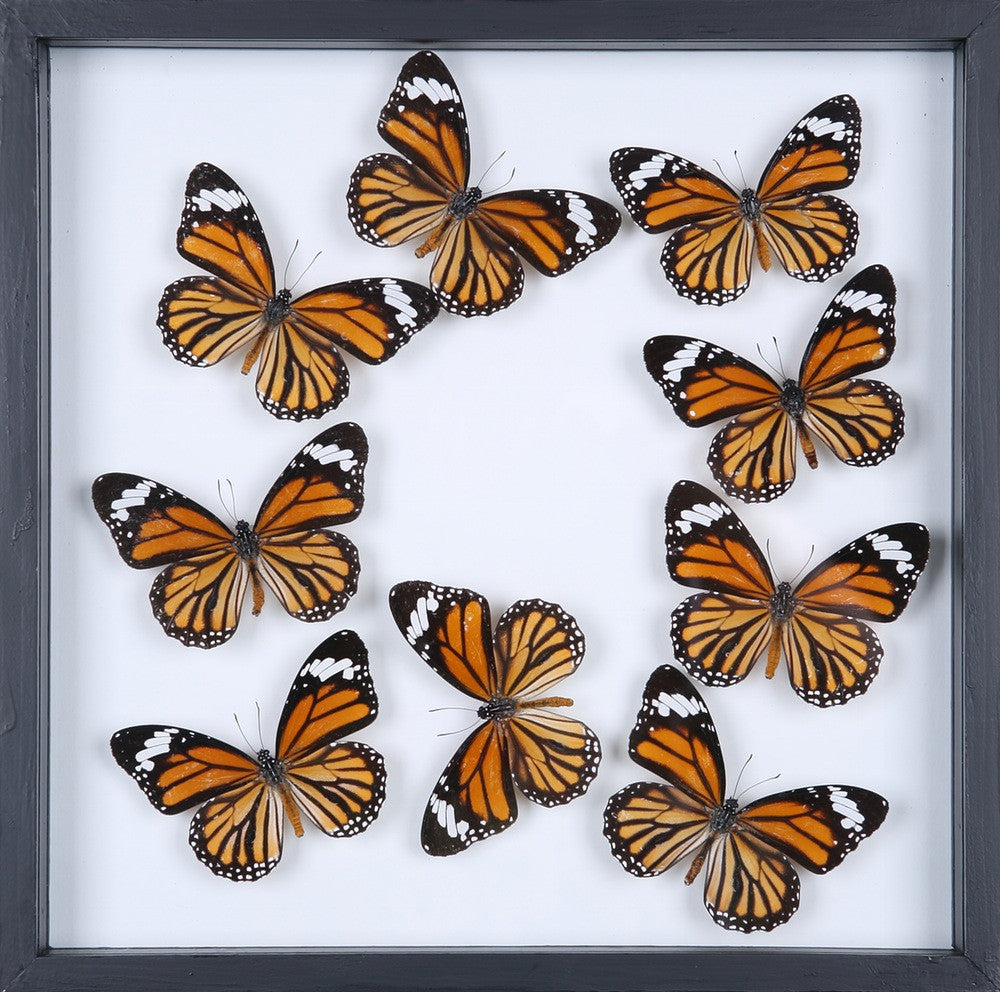
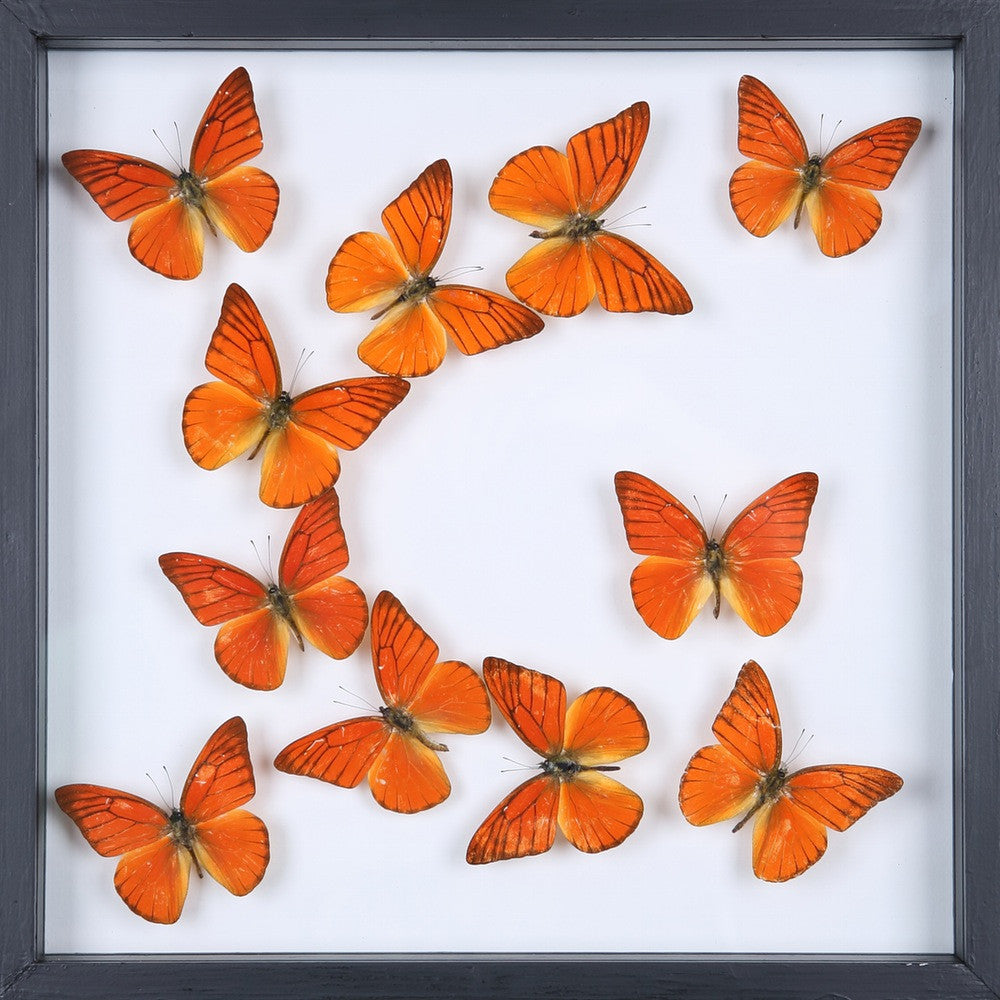
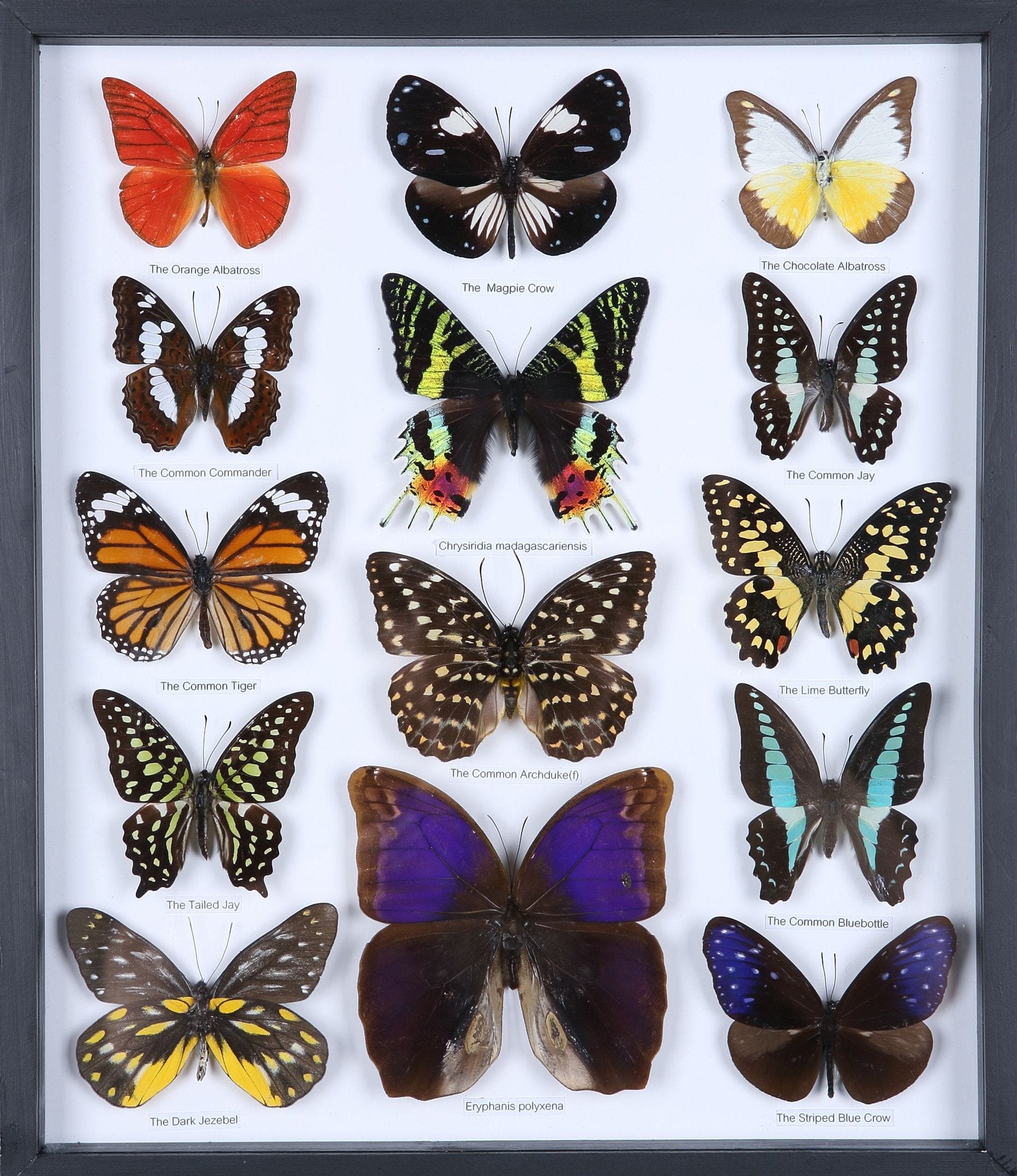
Lepidoptera (Butterflies and Moths)
Why special methods are needed: Wings must be displayed symmetrically to showcase patterns and colors.
Technique:
- Pin inserted vertically through the center of the thorax
- Specimen placed on a spreading board with grooved center
- Wings carefully positioned at precise angles (typically 90° for forewings)
- Held in place with pins and paper strips for 7-14 days while drying
- Antennae positioned forward and parallel
Special considerations: Delicate wing scales are easily damaged by handling; use forceps on body only, never touch wings directly.
Odonata (Dragonflies and Damselflies)
Why special methods are needed: Long, fragile abdomens and delicate wing membranes require extra support.
Technique:
- Pin through the thorax at an angle
- Wings positioned laterally (spread to sides) or folded naturally
- Abdomen supported with additional pins or bracing during drying
- May require internal support wire for very long abdomens
- Legs positioned naturally with fine pins
Special considerations: Colors often fade rapidly after death; specimens should be dried quickly in darkness.
Insects Requiring Point Mounting
Small Beetles (Under 10mm)
Why special methods are needed: Too small for standard pins without damaging the specimen.
Technique:
- Triangular card point cut from stiff paper
- Standard pin inserted through the wide end of the triangle
- Tiny drop of adhesive applied to the point tip
- Beetle attached to point on its right side
- Allows examination of underside and legs
Hymenoptera (Small Bees, Wasps, Ants)
Why special methods are needed: Delicate bodies and scientific importance of underside features.
Technique:
- Point mounting for specimens under 8mm
- Glued on right side of thorax
- Ants almost always point-mounted due to small size
- Wings (if present) left in natural position
Insects Requiring Minuten Pins
Micro-Lepidoptera (Tiny Moths)
Why special methods are needed: Extremely small size (2-5mm) makes standard pinning impossible.
Technique:
- Ultra-fine minuten pins (0.1mm diameter) used
- Minuten pin inserted through tiny moth
- Minuten pin then inserted into small cork or pith block
- Standard pin goes through the block for handling
- Wings may be spread on micro-spreading boards
Parasitic Wasps and Chalcids
Why special methods are needed: Microscopic size (1-3mm) and scientific value.
Technique:
- Minuten pins or card point mounting
- Often mounted on slides for microscopic examination
- Critical for taxonomic research
Insects Requiring Internal Support
Large-Bodied Orthoptera (Grasshoppers, Katydids)
Why special methods are needed: Heavy abdomens can sag or detach during drying.
Technique:
- Abdomen may be injected with preservative or stuffed with cotton
- Support pins placed under abdomen during drying
- Legs positioned with pins to create natural pose
- Large specimens may need wire armature
Mantids (Praying Mantises)
Why special methods are needed: Long bodies and raptorial forelegs require careful positioning.
Technique:
- Pin through thorax
- Forelegs positioned in characteristic "praying" pose
- Multiple support pins to hold legs and abdomen
- May require weeks to dry completely
Insects Requiring Slide Mounting
Aphids, Scale Insects, and Thrips
Why special methods are needed: Soft bodies and microscopic size make pinning impossible.
Technique:
- Preserved in alcohol first
- Cleared in potassium hydroxide
- Mounted in Canada balsam or similar medium on glass slides
- Covered with coverslip
- Examined under microscope
Lice and Fleas
Why special methods are needed: Flattened bodies and tiny size.
Technique:
- Slide mounting in clearing medium
- Allows detailed examination of diagnostic features
- Essential for species identification
Insects Requiring Envelope Storage
Papered Butterflies and Moths
Why special methods are needed: Space-efficient storage before final spreading.
Technique:
- Wings folded vertically over back
- Placed in glassine or paper envelope
- Data written on envelope exterior
- Can be relaxed and spread years later
- Standard method for field collecting
Special Techniques by Challenge
For Extremely Fragile Insects
-
Mayflies: Delicate bodies require immediate pinning and minimal handling
-
Lacewings: Transparent wings need careful spreading
-
Caddisflies: Hairy wings require gentle positioning
For Iridescent or Color-Changing Insects
-
Jewel beetles: Colors are structural and permanent—standard pinning works
-
Damselflies: Blues and greens fade rapidly—quick drying essential
-
Tiger beetles: Metallic colors stable—no special color preservation needed
For Aquatic Insects
-
Adult aquatic beetles: Standard pinning after drying
-
Larval stages: Preserved in alcohol, not pinned
-
Water bugs: May need abdomen support due to air sacs
Essential Specialized Equipment
-
Spreading boards: Various groove widths for different butterfly sizes
-
Minuten pins: Sizes 0.1mm to 0.2mm diameter
-
Point punch: Creates uniform triangular mounting points
-
Pinning block: Ensures consistent specimen height
-
Stage forceps: For handling tiny specimens
-
Relaxing chamber: Humidity box for softening dried specimens
-
Microscope slides and coverslips: For slide mounting
-
Clearing agents: KOH or lactic acid for soft-bodied insects
Professional Preparation Services
Specialized pinning techniques require years of practice, proper equipment, and detailed knowledge of insect anatomy. Professional entomological preparators ensure:
- Correct pinning method for each insect type
- Symmetrical, aesthetically pleasing positioning
- Minimal damage to delicate structures
- Proper data labeling and documentation
- Museum-quality results suitable for display or study
Expertly Prepared Specimens
Our collection features professionally prepared insects using appropriate specialized techniques for each species. From perfectly spread butterflies to expertly mounted beetles, every specimen is prepared by skilled entomologists using museum-standard methods—all ethically sourced and ready for display.
Explore Our Professional Collection